
Imagine the government going through your entire browsing history — every click, every search, every article you skimmed at 2 AM — and presenting any random link as evidence that you’re a criminal.
That’s exactly what happened to Roman Sterlingov.
The “Evidence”
After Roman’s arrest, prosecutors combed through thousands of pages of his documents, notes, and browsing history. They were looking for *something* — anything — to paint him as the dangerous mastermind behind Bitcoin Fog.
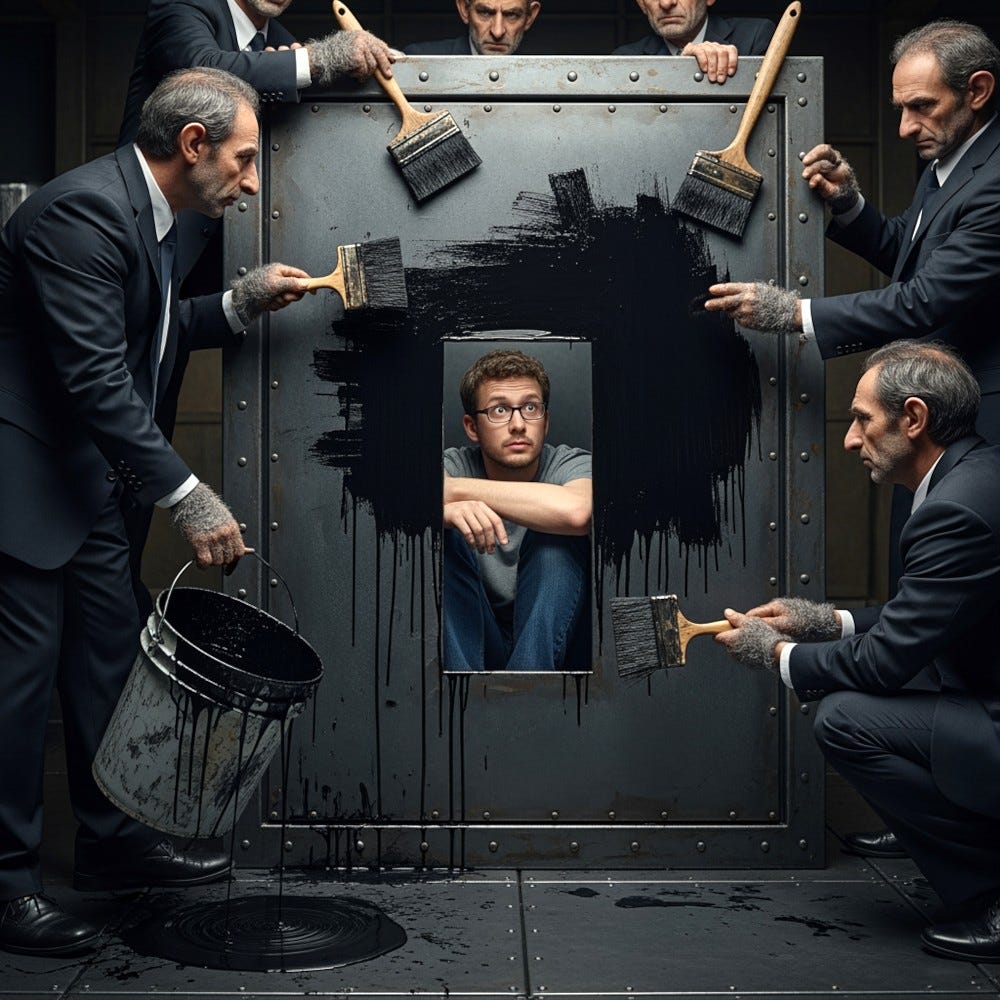
Some of the best things they could find? An article about WiFi-blocking paint.
For those unfamiliar, WiFi-blocking paint is a real product. People buy it to minimize electromagnetic field (EMF) exposure in their homes, to create disconnected spaces, to reduce interference. It’s available on Amazon. It’s completely legal. And Roman, like thousands of others, had simply read about it at some point — he never even had any.
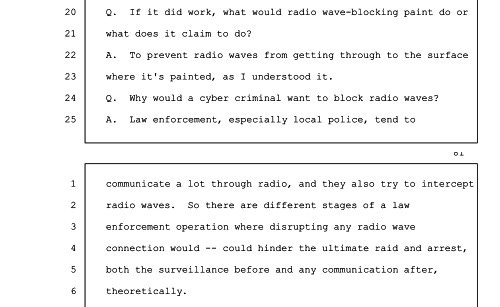
The prosecution presented this to a jury as if it were evidence of criminal planning. They sat in court and speculated aloud about how “he was looking to block radio waves,” manufacturing theories about the paint being used against mysterious radio waves that “Law enforcement, especially local police, tend to communicate a lot through radio, and they also try to intercept radio waves.” They couldn’t explain how paint connected to Bitcoin mixers or money laundering — because it doesn’t. But they hoped that if you present somebody as reading about weird things, it will make them look criminal anyway.
The Loaded Question
Perhaps the most manipulative moment came when the prosecution asked, without any real connection: *”Why would a cybercriminal use WiFi-blocking paint?”*
Think about that question. It’s not a question at all — it’s an accusation wrapped in a question mark. It presupposes guilt and then asks you to explain the behavior of someone you’ve already decided is guilty.
It doesn’t matter what you were browsing. The same loaded framing could be applied to anyone. Why would a criminal read about cryptography? Why would a criminal read about networking? Why would a criminal read *anything* about technology?
Combined with “expert” testimony that most jurors wouldn’t understand — and thus would falsely assume that everything a government employee in a suit is saying must be true — this kind of rhetorical manipulation is devastating. And the jury sat through *three weeks* of it, a deliberate tactic to give plenty of time to let the manipulative lies metastasize in the jury’s subconscious and form a solid bedrock of prejudice.
It would be one thing if this was an isolated mistake. But as the records show, all three weeks were full of these things, full of latching onto any technical detail about Roman’s hobbies, such as Linux or raspberry Pis — anything that an average person won’t understand, and making up a story about it.
The Real Problem
The government didn’t have evidence that Roman ran Bitcoin Fog. What they had was:
- A Chainalysis report (a proprietary software tool whose accuracy has been widely questioned).
- Bitcoin transactions history of Roman trading with many other people in the early days of Bitcoin.
- A man who liked computers and gadgets.
When your only evidence is “he was interested in technology” and a blockchain analysis company’s proprietary algorithm, you don’t have a case. You have a narrative — and you’re desperate enough to reach for the bucket of WiFi paint to cover it all up.
What This Reveals
The WiFi paint moment wasn’t just bad prosecution — it was a window into a case built on manufactured guilt. When you have to talk about paint to create prejudice against someone, you don’t have a case.
But the government kept going. They took an innocent curiosity, dressed it up as evidence of criminal intent, and hoped the jury wouldn’t ask the obvious question: *What does this have to do with Bitcoin Fog?*
The answer: nothing. Absolutely nothing.